Showing posts with label japanese craft books. Show all posts

Friday, 30 September 2011

Sewing under pressure

I could also pull this face at 7 years old
It's a skill passed down through generations

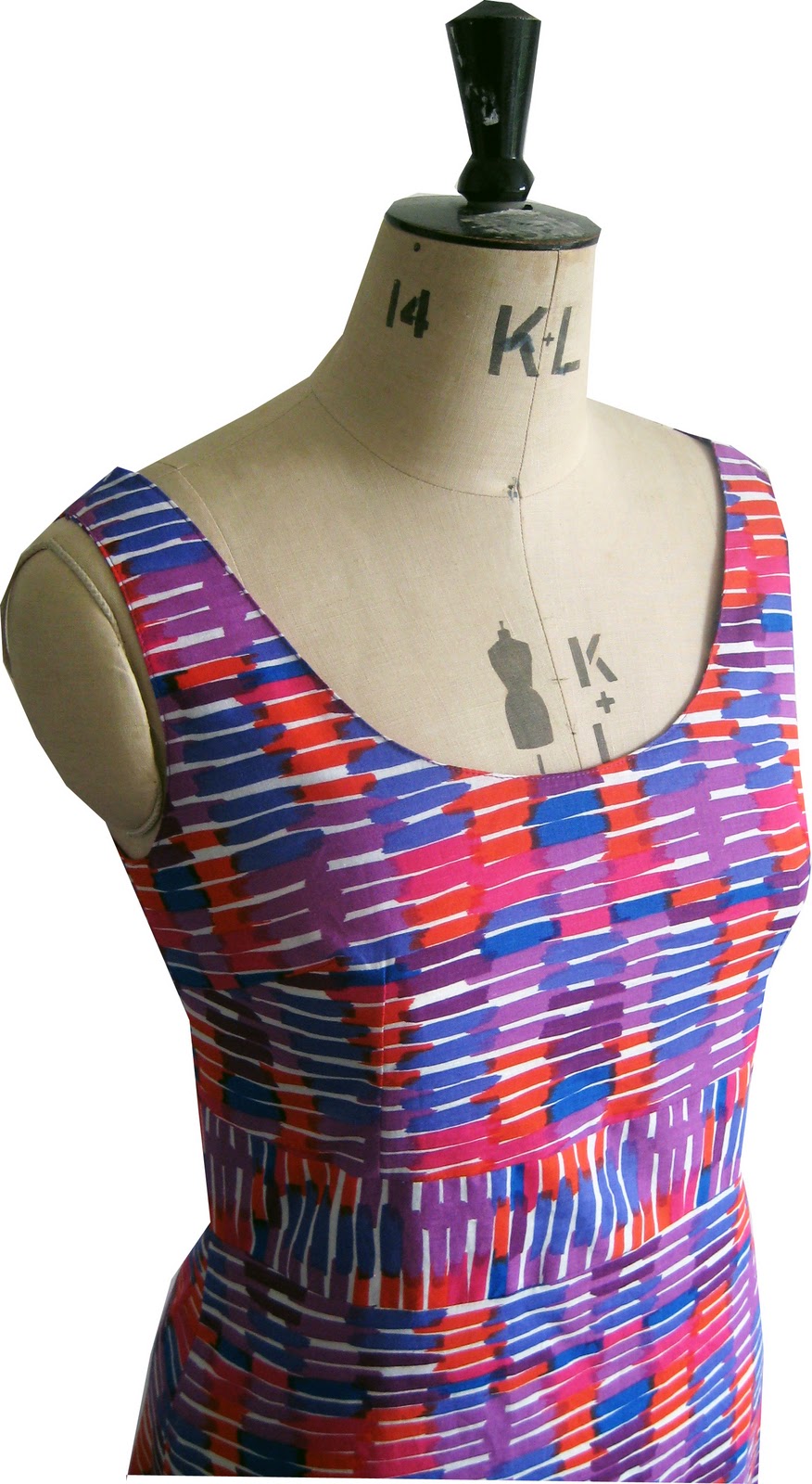
At the beginning of the summer I made a dress for an article that I wrote for Cloth magazine. The idea behind it was that I would keep a diary of how I cram sewing into everyday life as I often find myself wondering how on earth people find time to create balldresses/hand knitted shoes/felted dog coats seemingly overnight.

eating breakfast and sewing, don't try this at home kids

I won't re-write it all here, if you want to read it you can buy Cloth or a magnifying glass and read it here. I think buying Cloth is a better use of your money. To give you a taster, it did include tantrums, magic tricks and nearly flashing the father of one of my daughter's friends. All in a day's work for me.

she is soooo busted

After I finished writing it, my and my girl had a lot of fun re-creating moments from my diary (see grumpy time-out photo and chucking stuff out of the bath above). It makes more sense if you read the diary.


But I did want to show you the dress I made and write a little about the book I got the pattern from as I was really pleased with how it turned out.
I used Couture Dress and Smock book, a book that I have to admit I have overlooked a little. I'm not sure why as it is full of things that I want to make. I chose the dress on the right (below) because it was a nice simple fitted shift shape.
Because it had a high neck which doesn't suit me, I used the neckline from the dress on the right which worked out nicely.


I made a rough version of the dress out of a duvet cover as the sizes in this book were a little different to previous Japanese books I have used. It turned out well, I think the only tweak I made was to take a bit out of the neckline as there was a slight gape and I dropped the arm holes a little.

I had all sorts of ideas fabric wise and was holding off for some Echino fabric I was expecting. (It's just as well I didn't wait too long as it still hasn't arrived.) In the end I chose some bright lightweight cotton from my stash, liking the way I could play with the stripes on the waist.


The dress has a big long zip up the back which I think was the one problem I had as otherwise it went together very well. My zipper foot seriously misbehaved and it doesn't look as neat as I would like. Once day, I might take it out and try again (who am I kidding?).


With both kids at school now and some spare time in the day, I want to get back into making some more clothes, and then actually wear them. A few things have caught my eye in this book.

this top makes me think of Florence

I like the neckline and details on this dress...


And I might start here with this top, it's hard to see in the photo but it has pretty pin tucks on the neck and sleeves. I would have to make it quite a lot longer as I have a very long back and it already looks short in the picture, but I think that would be pretty easy.


I finally got round to buying a big roll of paper from Morplan to trace out the patterns and a super sharp tracing wheel after talking to pattern cutting pro Kerrie.

All I need now is the perfect fabric, but I want to make a rough version first to check fit and maybe tweak a few details. It's exciting to be back sewing again!

Sunday, 19 December 2010

Hunting and gathering top


It's been a really long time since I made anything for myself, I have done a fair bit of sewing recently, mostly bits and pieces for the kids. So when the Innocent voile arrived, it spurred me into action.

I chose 'dress c' from Les Couleurs Francaises, the idea being that I could make a top version of it and layer it with a longer sleeve top in the winter, or maybe thermals. You may remember Kelly made a gorgeous version of this dress in the sew along a few months back.

When I have made my top, I'm going to knock up a matching 
version for the first born, and together we'll go and trap some 
tiny woodland animals in a cute cage just like this. 

The sizes in this book range from 7 - 13 and from previous experience making the tie top, I know I am a size 9 (UK sizing, I am a 12 on top). I could have gone straight to the voile, but trying to be all grown up and sensible (and not wanting to ruin a perfectly good length of fabric) I decided to make a toile first.

You may find these previous posts helpful about sewing from Japanese craft books.

Tracing the pattern from the pattern sheet, I added a number of new steps learning from previous mistakes. I taped the paper I was tracing on to the pattern sheet using small bits of masking tape. If it moves around mid-trace, it's a nightmare to get it all lined up again, and this really helped.

When having a rummage through my supplies I found a number of other patterns I had traced off but hadn't really labeled them properly, so this time I wrote the book, dress, what the piece was and it's size on each shape that I traced off.

I am nearly at the end of my supply of paper that I use for tracing patterns, I'd love some suggestions from you on where to get new supplies. The paper I used was left over from my pattern cutting course and came on a huge roll I think from Morplan. I'm not sure I am ready for 275m of paper yet, given I only seem to make a garment every 6 months, it seems a little over the top. It would be great for the kids to draw on though.


It can be quite confusing tracing the pieces off or even finding them in the first place, so it's best to do this when you can concentrate (read: not on the kitchen table 10 minutes before the kids are due to have lunch and are swarming around you like hungry sharks). Draw around the shape on the original pattern sheet with your finger and make sure you have traced all the markings. It's really easy to miss them or presume they are for another piece. This pattern has a fair few. I made the top about 10cm shorter than the dress giving me scope to cut it even shorter when it was made up.

I made the toile out of an old sheet which is quite crisp and stiff, I think voile will be perfect for this top as it has such good drape and is lovely and light, the tie doesn't want to be too rigid or it might look like a pendulum.

The instructions for Japanese patterns are mostly pictorial, but using my trusty translations (which come with all Japanese craft books at M is for make), I picked out some key terms to help me out. Facing for example is 見返し.


Each step is numbered on the diagrams so that you do them in the right order. It can be a little confusing because, looking at the picture, number 3 is missing. But there is a picture of the finished garment on the first page where each step is labeled. Number 3 is there, but as it's simply sewing the shoulders together, it doesn't need a picture.


I've said this before, but one thing I really like about sewing from these books is that you do have to stop and think at each step rather than blindly follow instructions. You have to think about how the pieces fit together, how they are finished, what order you are do things in. I think I learn more sewing from Japanese books than ordinary patterns.

It's the first one of these patterns that I have done that has included sleeves and darts. It has cute gathered cap sleeves which were pretty easy to fit. I did have to get my course notes out when sewing the darts to figure out which way to press them. In the end I went for downwards, I think this was right, but I'm not totally convinced, let me know if I'm wrong.

I was paying so much attention to this that I made a rather basic mistake.

Is this picture;

(a) a fashion forward garment with darts on the outside as an expression about the female form, or
(b) a blunder by an idiot who didn't check which side they were sewing on?


You guessed it, (b) I sewed by darts on the outside, I am now very glad that I made the toile up first. What an idiot.


The rest of it went more smoothly, the collar took a bit of figuring out, and when I come to sew the final garment, I will need to take my time and make sure my pieces are cut out accurately and the seams all ironed well. I really pleased how it turned out, I've never sewn a collar before.

 
So trying it on for size - and it fits really well, apart from being far too long and the ties need shortening too.

Here is the shortened version, now I have to adjust the length of the pattern piece and hardest of all, choose a voile.


Other developments; my trusty sewing machine has developed what I am trying not to think of as a death rattle. So I have bought tools to give it a bit of a clean and oil up hoping that this will soothe it. I might even have to find the manual somewhere, let's hope this project doesn't stall while I try to figure out how to reassemble it.

Monday, 3 May 2010

Tie - top take three


To my surprise I actually did manage to finish my tie-top from 'Les Couleurs Francaises' this weekend, thanks in no small part to the rubbish bank holiday weather keeping us in the house.

You can see my 2 draft versions of this top here and here. I made it from Anna Maria Horner Little Folks voile, in anticipation of stocking this fabric at 'M is for make' imminently. I am always searching for pretty dress-making rather than quilting fabric and this voile is perfect, it's so soft, drapes well and has a lovely sheen. I can't wait to use more of it.

The finished top has turned out well, I love the details, although they are a little hidden in the print, it has gathering along the seam on the bust and a pleat where the tie joins the top at the shoulder.


It fits nicely, when I make it in a different fabric, I will make the arm-holes maybe half a centimetre bigger as they feel a little tight, even though they didn't on the draft version. Also despite adding quite a bit to the length, I would still like to add maybe an inch more. I had first intended to make the top from Nani Iro fabric, but changed my mind last minute so had the wrong colour bias-binding, but you can't see it when it's on.


I had a great moment whilst putting it on, where I found myself looking for a label so I knew which way was the front and then realising that of course, there wasn't one.

Friday, 30 April 2010

Tie - top take two


Sitting here and flicking here between take one and take two, there doesn't look like much difference between the two. But this top is a much better fit, it's not too big at the sides and I have added roughly 5" to the length so there is absolutely no risk of me accidentally flashing my stomach, ever.

I ended up dropping 2 sizes, so this is a size "9" incase anyone else is using this book. Next time I make something from a new book I will take a bit more trouble to measure myself and compare it to the chart rather than ploughing straight in with the first size that takes my fancy.

One area where I will try and tweak the pattern is at the front, it has a bit too much fabric in the centre, if you look closely in the picture, you can see it's pinned. This might have something to do with the next line being unfinished as it will have bias binding on the final version. I think even with that it may bag too much, so I am going to take about 1cm off at the top and hope it turns out ok. I did this on my pattern cutting course dress to stop the scoop neck gaping and it worked out.

The plan is this weekend to make the top up and wear it, i'll let you know how it turns out.

Thursday, 22 April 2010

Tie - top take one


I have finished my first draft of the tie-top from 'Les Couleurs Francaises'. It's a really simple top and as I wasn't doing any finishing on this rough version, it was really quick to sew up. I'm so glad I did this version as it's way too big, I need about an inch off at the sides and in the middle, you can see the neckline folding in the picture. I suspect I have made it one if not two sizes too big.


Looking at the pattern, going one size down should take off enough at the sides, I think it's safer to use the pattern than try and adjust this one which is too big all over.

I LOVE this top though. I wasn't sure if the neck line would be too high for me, and was prepared to lower it a bit, but the long scoop works really well and I like the gathers too at the bust. As I suspected it is a bit too short for me, I blogged about my size 26 back a while back and I'll be adding 2 or 3 inches to the length of this. Also I am loving the top in this duvet cover fabric, maybe i'll start a new trend, remember - you read about it here first.

Friday, 26 March 2010

Sewing from Japanese books - part 4


Read part 1, part 2, and part 3 here.

I have finally finished the top I have been making from 'Sweet Style for Kids'. I'm really happy with the way it's turned out. The fabric is really pretty, quite soft, perfect for a summer dress.

The pattern turned out well too, it fits nicely, just the right amount of flare. It's intended to be worn as a tunic over jeans or leggings, and it will make a great summer dress if a few inches longer. I think this could be a staple of her summer wardrobe, maybe one in each colour as they don't take long to make.

The only bit I am disappointed with it my bias binding on the neck and arms, I hurried it and so it didn't turn out as well as it could. Also putting a french seam up the back made it difficult to sew the edges on the opening at the back. I'll zig-zag the seams next time when I get an overlocking machine foot. Also I might try different finishes on the arms and neck, maybe using a contrast colour to bind them on both sides.

Friday, 19 March 2010

Sewing from Japanese books - part 3


 Read part 1 here and part 2 here.


The next step after cutting out the pattern is the fun bit - sewing it all together! In this pattern, each step is numbered. You can see here, step 1 is finishing the raw edges by zig-zagging them, sewing up the back centre seam but stopping short of the top for the opening, the measurement for this is given in an earlier diagram. The second picture shows the same seam pressed open.

In step 2, the side and shoulder seams and then sewn together and pressed open.


Step 4 and 5 explain how to attach the facing to the neck, first by joining the front and back facings together, then sewing it onto the neck hole, including fixing a loop for the fastening. It shows notches clipped out of the curve within the seam allowance. In the last diagram on the right, the facing is stitched 2mm from the seam allowance to stop it from rolling over. Next (shown in the picture below) the edges of the opening are stitched 0.5 mm from the seam.


Step 6 explains how to bias bind the armholes, I found this quite confusing the first time I did it, but after bit of googling, it became clearer!

Step 7 is sewing the hem, 8 is making the casing for the belt  and 9 is sewing it on. The measurements of where to place the belt are shown in the original diagrams. Step 10 is fixing on the button for the opening.

All finished! It is a simple garment to make, and no doubt making other things especially for adults might be a bit more complicated. But most of the instructions are shown in the form of a picture and infact they are extremely detailed, showing steps they maybe don't need to.

The finished draft top is shown at the beginning of the post. The fit is good, though I might take in a bit of slack under the arms. I didn't bother with any of the finishing with this version as I just wanted to check the fit. I re-drafted the pattern with about 1cm less at the side under the arm, and flared it out to the same point at the hem.


Yesterday I actually remembered to pre-wash the fabric I will be using, so won't be frantically ironing it dry so that I can sew it, which is what I usually end up doing!


The pattern shows how much fabric to use in this diagram, suggesting 115cm - 125cm. However, I have decided to bias bind the neck rather than use a facing, so this cuts down the fabric considerably and by measuring the pattern pieces, I worked out that I only needed 75cm.

I will try and sew it up this weekend and post the final top.

Thursday, 11 March 2010

Sewing from Japanese books - part 2


Following on from my last post, the next step is to trace and cut out the pattern on a new sheet of paper. It's really important to remember that the patterns in Japanese craft books do not include the seam allowance. The instructions show the suggested seam allowance which I always use, but if you want to do a different seam and so need a bigger or smaller allowance, you have the option to change it.

It's worth checking the instructions before doing this so that you leave enough space around the shape to add the seam allowance and make the adjustments to the pattern.

It is also really helpful to mark on the following things:
  • The centre back and front line
  • The grainline
  • The front and back
  • Which pattern you are cutting out (this may sound obvious, but I have gone back to books and found several patterns that I have cut out and not been sure which one they are!)
You can work out these from the translation sheet that I send out with all books, but 前 is front and 後 is back. Grainline is 布目線.


My pattern has a facing (見返し shown in purple) included in the main bodice, so I traced that off separately too. I have pattern cutting paper that is thin enough to see through to trace directly from the pattern sheet, but it this wasn't possible, I could use a tracing wheel to transfer the marks.

Looking at the book, I am doing size 120cm and measurements for this are shown in green. I have circled the adjustments with the bigger red circle. I need to extend the basic pattern shape down 21cm and flare it out so that the bottom is 24.1cm wide. This is why it's important to leave enough space on your paper so that you don't have to tape on another piece on the bottom.


Once this was done, I added on the seam allowance, this is usually 1.5cm or 0.5cm where bias binding is used on the neck or armholes. This is quicker to do than you would expect and I use my pattern master to help draw neat curves.

Some pieces of the pattern are drawn free-hand, these are usually bits that are rectangular, and simple enough not to be included on the pattern sheet.

There is on this diagram a diagonal strip on the top left corner, this is for the bias binding, I usually ignore this and buy mine as it's easier!

Here is my finished pattern, not following my own advice, I didn't leave enough space on the centre back so had to tape on an extra sheet of paper for the seam allowance. This is a simple pattern, sewing adult clothes can be more complicated from these books with more pattern pieces that oftern overlap on the sheet, however the process is the same.


Next time, I'll cover cutting the pattern out and sewing it together!

Tuesday, 9 March 2010

Sewing from Japanese books - part 1


I've been meaning to write a post on sewing from Japanese craft books for a while now. They can, on first inspection be a bit daunting, (they're in Japanese you know). And Japanese isn't like French, or German that you can remember a few words from school, or figure out after a bit of googling.

The books are beautiful, quite aspirational I think, picture beautiful people hanging around beautiful places in clothes you could, and want to, make. When I first bought one of these books I opened and closed it in frustration many times as I couldn't figure out what on earth was going on.

They are quite like pattern cutting in a way, you have your basic shape, a top or skirt or trousers and by making a few thoughtful variations you can create simple, stylish garments. The instructions are clear, mostly pictorial, and actually quite easy to follow with the help of translations for some of the key terms. All books from 'M is for make' come with a set of translations.

The book I am using is 'Sweet Style for Kids' (shown at the top) I chose this as the clothes are pretty and simple and I can imagine adding some pretty details to them, Boden style, here is the top I want to make.


Where to start? When I made myself some clothes from Autumn / Winter wear for women, I wrongly presumed I would be a size 'large' but as a UK 12, I was actually a medium in that book. Had I taken the time to read the measurements chart, I could have saved myself some sewing time. Here is the size chart from this book;


Because I know what kind of words these are going to be, they were fairly easy to translate (I have put the english translations in above). The other measurements? well I have no idea what they are, but with the bust, waist and hip known, I could pick out the size I needed, 120cm for a 5 1/2 year old. However, because I haven't made anything from this book before and I'm unsure of how it will fit, I am going to run up draft version of this top before making it in the proper fabric.

First of all I want to find the right pattern on the full scaled pattern sheet which is included inside the book. This can be quite confusing, as not all the patterns are included on the sheet. This is because they give you the basic bodice pattern and show you how to adapt it - pattern cutting made easy! Looking at the instructions where I have circled the text in red it shows the number 4 in the same colour as the pictures of the garment.


Looking at the pattern sheet, I can clearly see these pieces have a 4 on, and it makes sense, they look like the top I want to make.


Next time, I'll write about drafting the pattern from the instructions. Let me know if you need any more info or detail and I'll see what I can do!